
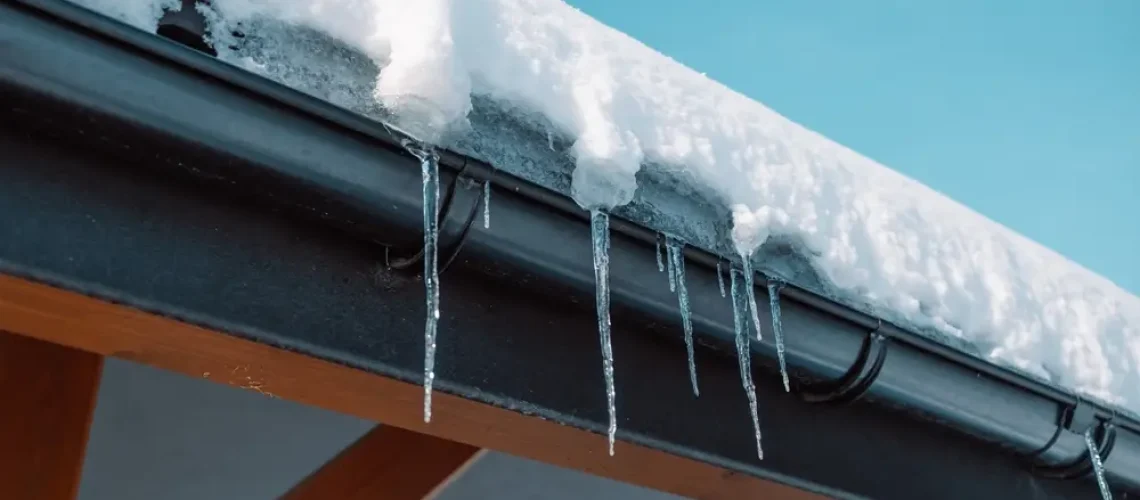
An ice dam is a ridge of ice that forms along the lower edge of a roof and blocks melting snow from draining off. When that water has nowhere to go, it can back up under shingles and leak into ceilings, walls, and insulation. Ice dams are especially common during winter when temperatures swing above and below freezing after heavy rain or snow. The good news is that most ice dam problems can be reduced with the right mix of immediate steps and long term attic improvements.
TLDR
- Ice dams form when snow melts higher on the roof and refreezes at the colder eaves, creating a dam that traps water.
- Warning signs include thick icicles, an ice ridge at the roof edge, and water stains inside.
- Safer DIY steps include roof raking and calcium chloride melt channels, but roof climbing and chipping ice are high risk.
- The most reliable prevention focuses on air sealing, attic insulation, and ventilation.
The science of why ice dams form
Ice dams usually start with uneven roof temperatures. Heat from the home escapes into the attic through gaps and thin insulation, warming the roof deck above it. Snow melts on those warmer roof sections, then the water runs down to the colder roof edge. At the eaves, it refreezes and builds a ridge that can keep growing during repeated melt and refreeze cycles.
Signs of an ice dam on a roof
Thick icicles and heavy ice at the eaves
Icicles alone do not always mean an ice dam. But large, persistent icicles paired with ice buildup along the gutter line often suggest water is freezing at the roof edge instead of draining away. Icicles and ice buildup at the edge are common signs to watch for.
A visible ridge of ice along the roof edge
If there is a clear lip or ridge of ice near the gutter line, that is the “dam.” It can be thin at first, then thicken after a few thaw and freeze cycles. Once a ridge forms, meltwater has an easier time backing up.
Water stains or dampness inside
Water can work up under shingles during repeated cycles and enter the attic and ceilings. A ceiling stain near an exterior wall, damp attic insulation, or peeling paint can mean water is getting under the roof covering.
Sagging gutters or pulled fascia
Ice is heavy and can strain gutters and fascia boards. If the gutter line looks bowed, loose, or pulled away, treat it as a warning sign and check for ice buildup along the roof edge.
What causes ice dams most often
Many homeowners assume ice dams are only about snow depth. Snow matters, but the real driver is heat loss and temperature variation across the roof.
| Cause | What it does | What a homeowner might notice |
| Warm air leaking into the attic | Warms parts of the roof deck and starts melting snow | Ice along eaves even when it is very cold outside |
| Not enough attic insulation | Lets house heat reach the roof deck | Faster snow melt on roof compared to neighbors |
| Poor attic ventilation | Makes roof temperature less consistent | Ice buildup returns after each snowfall |
| Freeze and thaw weather patterns | Repeats melt and refreeze, building the dam | Thickening ridge after mild days and cold nights |
| Clogged gutters or blocked drainage paths | Adds places for ice to accumulate and hold water | Ice packed into gutters and downspouts |
The most effective approach is improving insulation and ventilation so the attic stays colder and the roof stays more uniform in temperature.
What to do right now if an ice dam is forming
Remove snow near the roof edge with a roof rake
From the ground, use a roof rake to clear the first 3 to 4 feet of snow from the roof edge. That reduces meltwater feeding the ice dam.
Create a drain path with calcium chloride melt channels
A common method is to fill a fabric “sock” (often a nylon stocking) with calcium chloride and place it across the dam so it melts a channel for drainage. This is safer than climbing onto the roof and less likely to damage shingles than chipping ice.
Manage active leaks indoors
If water is already coming in, the priority is limiting damage inside. Use a bucket, protect flooring, and consider drying the area quickly to reduce the risk of mold. If ceiling drywall is bulging, it can hold a lot of water, so treat it as urgent.
Avoid these common “quick fixes”
- Chipping or pounding ice with a tool: This can damage shingles, gutters, and flashing, and it increases injury risk.
- Climbing onto an icy roof: Falls are one of the most serious winter hazards.
- Using rock salt: It can corrode metal and harm landscaping.
The long term fixes that actually prevent repeat ice dams
Air seal the attic first
Sealing leaks keeps warm, moist household air out of the attic. Common leak areas include attic hatches, recessed lights, plumbing penetrations, and duct connections. This step often matters as much as adding insulation.
Improve attic insulation to reduce roof warming
More insulation between the living space and attic reduces heat flow to the roof deck. Insulating between living spaces and the attic is a core prevention step.
Balance attic ventilation to keep the roof cold and uniform
Ventilation helps keep the roof deck closer to outdoor temperature and reduces hot spots that melt snow. In many homes, balanced soffit intake and ridge or roof exhaust are key pieces of the solution.Temperature differences across the roof surface are a main driver and that heat from the house is the usual source.
Add protective underlayment in vulnerable areas
An ice and water shield membrane can help prevent water intrusion if an ice dam forms. It is not a cure for the underlying cause, but it can reduce leak risk at the eaves and valleys.
Consider heat cables cautiously
Heat cables can help create a drainage path in specific problem zones, but they do not fix attic heat loss. They also require proper installation and monitoring.
When it is time to call a professional
If the ice dam is large, the roof is steep, or there is active leaking, professional removal is typically the safest option. Pros may use steam based removal methods designed to reduce damage to shingles and flashing. If ice dams are recurring every winter, a professional assessment of air sealing, insulation depth, and ventilation balance is often the fastest way to stop the cycle.
Frequently Asked Questions
How can you tell the difference between icicles and ice dams
Icicles can form without an ice dam. Ice dams involve a ridge of ice at the roof edge that blocks drainage and causes water to back up. If you see a thick ice lip along the eaves or water stains indoors, treat it as more than just icicles.
What is the safest DIY way to remove an ice dam
Safer homeowner steps usually stay on the ground. Roof raking the snow near the eaves and using calcium chloride melt channels are common approaches. Travelers outlines these methods and emphasizes careful, step by step removal.
Do ice dams mean a roof is failing
Not necessarily. Ice dams usually point to heat loss, insulation gaps, ventilation issues, or weather patterns, rather than a roof that is “bad.” Still, once water gets under shingles, damage can spread quickly.
Can improving insulation alone solve ice dams
Insulation helps, but many sources stress that air sealing and ventilation matter too. If warm air is still leaking into the attic, adding insulation can be only a partial fix.
Why do ice dams keep returning to the same spot
Recurring ice dams often show where roof temperatures are uneven. Common culprits are attic bypasses beneath that section, compressed insulation, or ventilation dead zones.
Key takeaways
Ice dams form when melting snow refreezes at the eaves and blocks drainage, which can lead to leaks and interior damage. Homeowners can watch for thick icicles, ice ridges, and water stains as early warning signs. Short term actions like roof raking and calcium chloride melt channels can reduce damage risk, but the most reliable prevention focuses on air sealing, insulation, and ventilation improvements. For large ice dams, steep roofs, or active leaks, professional removal and a root cause assessment are often the safest next step.